What does it take to report from places where the news is unfolding in real time?
For Hugo Bachega, the answer has involved years of international journalism, political reporting, live broadcasting and assignments in some of the world’s most closely watched regions. From beginning his career at Reuters in Brazil to reporting for the BBC from Ukraine and the Middle East, Bachega has developed a career built around international news and on-the-ground reporting.
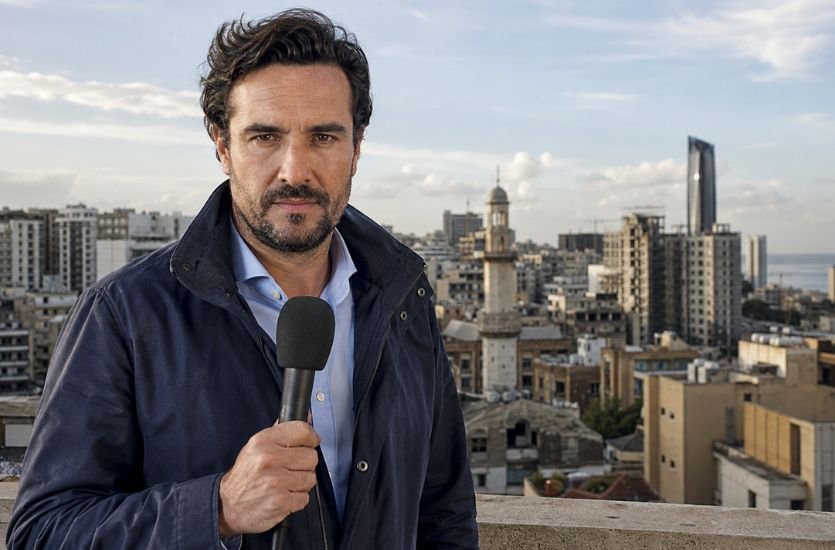
Today, Hugo Bachega is known as a BBC journalist and Middle East correspondent, with Beirut serving as an important base for his reporting. His work has covered conflicts, political developments and humanitarian stories across the region, while earlier assignments took him to countries including Ukraine, Egypt and the United States. Current BBC-related listings identify him as a Middle East correspondent, and recent The Global Story programming has featured him discussing the war in Lebanon.
Quick Bio of Hugo Bachega
| Category | Details |
|---|---|
| Name | Hugo Bachega |
| Profession | Journalist and foreign correspondent |
| Known for | BBC News international reporting |
| Current role | BBC Middle East Correspondent |
| Base associated with role | Beirut, Lebanon |
| Earlier employer | Reuters |
| Reuters starting point | São Paulo, Brazil |
| Major reporting areas | Middle East, Ukraine, international politics and conflict |
| Earlier international assignments | Cairo, London, Washington, D.C. and Kyiv |
| Nationality/background | Brazilian-born British journalist, according to professional biographical material |
| Date of birth | Not reliably established in major public sources |
| Wife/family | Private; no reliably verified public information establishing a spouse or children |
It is worth separating documented professional information from the many low-quality biography pages that circulate online. Bachega’s journalism career is relatively well documented, while details such as his exact age, date of birth, salary, net worth and private family life are not reliably established.
Who Is Hugo Bachega?
Hugo Bachega is an international journalist best known for his work with BBC News. His career has developed from political reporting in Brazil into foreign correspondence covering major international events.
His professional journey is particularly interesting because it has taken him through several major journalism environments. He began at Reuters in São Paulo before moving into international reporting and working from locations including Cairo, London, Washington and Kyiv.
Today, his name is strongly associated with BBC coverage of the Middle East. Recent BBC programming identifies him as the organization’s Middle East Correspondent, including appearances on The Global Story discussing developments in Lebanon and the wider region.
This combination of wire-service experience and BBC international broadcasting has helped establish Bachega as a recognizable foreign correspondent.
Hugo Bachega’s Early Journalism Career
Before becoming familiar to BBC audiences, Bachega began his professional journalism career with Reuters.
According to biographical material about his career, he started as an intern at Reuters in São Paulo and later became a full-time political correspondent.
This early experience was significant because Reuters operates on a very different rhythm from traditional long-form journalism. Wire-service reporters are expected to gather information quickly, verify developing events and produce clear reports for audiences around the world.
Bachega’s early work in Brazil therefore gave him a foundation in political and breaking-news journalism before his career expanded internationally.
Reporting From Brazil
Brazilian politics was an important part of Bachega’s early professional experience.
His Reuters byline appeared on political reporting from Brazil, including coverage of major developments involving the country’s government and political institutions. That period helped establish his experience in covering complicated political stories before he moved increasingly toward international assignments.
The transition from domestic political reporting to foreign correspondence would eventually become one of the defining features of his career.
From Brazil to International Journalism
Bachega’s career did not remain confined to Brazil.
His professional path eventually included assignments in Cairo, London, Washington, D.C. and Kyiv, exposing him to different political systems, cultures and international crises.
The progression is notable because each location brought a different type of journalism challenge.
Cairo placed him close to political upheaval in Egypt and wider Middle Eastern affairs. Washington provided exposure to American politics and international policy. Kyiv brought him directly into reporting on Russia’s invasion of Ukraine.
Eventually, Beirut became central to his work as a BBC Middle East correspondent.
This career path illustrates how foreign correspondents often develop expertise not simply through one country but through years of reporting across multiple regions.
Hugo Bachega in Cairo
One of the important chapters of Bachega’s international career was his time in Cairo.
His work there included reporting on Egypt’s political turbulence and the country’s rapidly changing political environment. The experience was particularly valuable because Egypt occupies an important position in Middle Eastern politics.
Reporting from Cairo also meant working in a region where political developments could change rapidly and where events in one country could have consequences across the wider Middle East.
For Bachega, this period helped establish the international reporting experience that later became central to his BBC career.
Hugo Bachega and Ukraine
Another major chapter in Bachega’s career came with his reporting from Ukraine.
His time in Kyiv placed him close to the war following Russia’s full-scale invasion of Ukraine. For international journalists, reporting from an active conflict zone involves challenges that are very different from ordinary political reporting.
News can change within minutes, communications can become unreliable and journalists must work in environments where physical danger is a genuine concern.
Bachega became particularly recognizable to some BBC viewers after a live report from Kyiv was interrupted by explosions in October 2022. The incident illustrated the risks faced by journalists reporting from active war zones.
His Ukraine assignment therefore became an important part of the public story surrounding Hugo Bachega BBC reporting.
Hugo Bachega’s Move Toward the Middle East
Bachega’s career eventually brought him back to a region with which he had already developed professional familiarity.
His current work is strongly connected to the Middle East, and BBC-related sources identify him as a Middle East correspondent based in Beirut.
Beirut is an especially significant location for an international correspondent because Lebanon sits at the intersection of several major regional political and military developments.
From there, Bachega has reported on Lebanon, Israel, Gaza, Syria and other developments affecting the wider Middle East.
His reporting has also appeared in BBC programs that examine regional conflicts in greater depth. In May 2026, for example, The Global Story featured Bachega discussing why the war in Lebanon remained difficult to end and what the conflict could mean for wider diplomatic efforts.
Hugo Bachega and BBC News
The phrase Hugo Bachega BBC is now closely connected with his professional identity.
Bachega’s BBC work includes written journalism, filmed reports, live reporting and participation in BBC news programs.
His role has placed him in front of international audiences during major developments, particularly in the Middle East.
A journalist working in this position is not simply reporting from a newsroom. Foreign correspondents frequently have to travel, interview officials and civilians, assess information from different sources and explain complicated events to audiences who may be thousands of miles away.
That is an important part of understanding who Hugo Bachega is. His career is fundamentally about international reporting rather than celebrity.
Hugo Bachega as a Middle East Correspondent
Being a BBC Middle East correspondent requires an understanding of a region shaped by complex political, military and historical relationships.
Bachega’s recent reporting has included developments in Lebanon and Syria as well as the broader conflict involving Israel and Hezbollah.
Recent BBC listings continue to identify him as a Middle East correspondent.
In 2026, for example, his reporting included coverage of developments in Lebanon and Syria. A BBC report published in July 2026 carried Bachega’s byline alongside Adam Goldsmith in coverage of explosions in Damascus during French President Emmanuel Macron’s visit.
These assignments demonstrate that his current role extends beyond a single conflict and encompasses broader regional developments.
Hugo Bachega and Lebanon
Lebanon has become one of the most important locations associated with Bachega’s recent work.
From Beirut, he has reported on political and military developments involving Lebanon and neighboring countries. His coverage has included the continuing conflict involving Israel and Hezbollah and the difficulties surrounding ceasefire arrangements.
His appearance on BBC’s The Global Story in May 2026 is one example. The program described him as the Middle East Correspondent and asked him to explain why the war in Lebanon was proving difficult to end.
This type of reporting requires more than simply describing events. A correspondent must also provide context so that an international audience can understand why developments in one country matter beyond its borders.
Hugo Bachega and Syria
Syria has also become part of Bachega’s recent Middle East reporting.
The fall of the Assad government and subsequent developments in Syria increased the importance of regional reporting from Beirut and surrounding areas. Current listings of BBC correspondents identify Bachega among the journalists covering the Middle East, including Beirut-based reporting.
His reporting has therefore continued to evolve alongside the rapidly changing political landscape of the region.
Hugo Bachega’s Reporting Style
It is difficult to reduce a foreign correspondent’s work to one simple style because assignments vary considerably.
However, Bachega’s career demonstrates several recurring elements: on-location reporting, live coverage, political context and conflict journalism.
His Reuters background is particularly relevant here. Wire-service journalism emphasizes accuracy, speed and concise reporting, while BBC broadcasting adds another dimension through video, live television and explanatory journalism.
The result is a career that combines the fast-moving nature of breaking news with the demands of international broadcasting.
Hugo Bachega Education
Questions about Hugo Bachega education frequently appear in online searches.
There is some professional biographical material indicating that Bachega lived in the Middle East as a student. However, reliable public sources do not provide enough information to confidently establish every detail of his educational history.
For that reason, claims about a specific university, degree or graduation date should be treated carefully unless supported by a primary or highly authoritative source.
A professional biography should never fill gaps in a person’s history with assumptions.
Where Is Hugo Bachega From?
One of the most common searches is “Where is Hugo Bachega from?”
Professional biographical material describes him as Brazilian-born British. His early journalism career also provides a strong connection to Brazil, where he began working with Reuters in São Paulo.
His background is therefore an interesting part of his professional story: a journalist who began in Brazil eventually developed an international career that took him to multiple continents.
Hugo Bachega Nationality
The phrase Hugo Bachega nationality can produce conflicting results on low-quality biography websites.
The stronger professional description identifies him as a Brazilian-born British journalist.
Rather than speculating about citizenship documents or family background, it is more accurate to describe the publicly documented information this way.
Hugo Bachega Age and Date of Birth
Searches for Hugo Bachega age and Hugo Bachega date of birth produce numerous claims online, but there is no sufficiently reliable public documentation to establish an exact date of birth.
That means an article should avoid presenting a specific age as fact.
This is especially important because biography websites sometimes copy information from one another, creating the appearance of multiple independent sources when the original claim may have no reliable foundation.
Is Hugo Bachega Married?
Another popular search is “Is Hugo Bachega married?”
There is no sufficiently reliable public source establishing a wife or spouse.
Bachega’s public profile is primarily professional, and he appears to keep his personal life relatively private. As a result, claims about a Hugo Bachega wife, partner or children should not be presented as established facts unless supported by a credible source.
For a professional biography, the absence of verified information is preferable to publishing speculation.
Hugo Bachega Family
The same principle applies to searches about Hugo Bachega family.
His professional career is well documented, but detailed information about his parents, siblings, spouse or children is not widely established through authoritative sources.
That privacy is worth respecting.
A person’s professional achievements can be discussed without turning an article into speculation about their private relationships.
Hugo Bachega Net Worth and Salary
Searches for Hugo Bachega net worth and Hugo Bachega salary also appear online.
However, there is no reliable public financial documentation that establishes his exact BBC salary or personal net worth.
Figures published by biography and celebrity-style websites should therefore not be presented as fact.
Journalists’ salaries can vary according to role, experience, location and employment arrangements, while personal net worth cannot normally be calculated accurately from a job title alone.
Hugo Bachega on Social Media
Like many modern journalists, Bachega has a public-facing presence associated with social media and professional journalism.
However, users should be careful when searching for Hugo Bachega Instagram, Hugo Bachega X or other social profiles because people with the same name can appear in search results.
The safest approach is to verify that an account is connected to his journalism work before treating it as his official account.
Why Hugo Bachega’s Career Matters
The story of Hugo Bachega is interesting because it represents the traditional path of the international correspondent in a modern media environment.
He did not become known simply because of one television appearance. His career developed over years of reporting.
He started in Brazil, gained experience at Reuters, moved into international assignments and eventually became associated with BBC reporting from some of the world’s most important news regions.
His career has included:
Brazilian politics → Cairo → London → Washington → Kyiv → Beirut → Middle East correspondence
Each stage added a different layer of international experience.
A Career Built Around Major World Events
Bachega’s professional timeline has repeatedly placed him near major historical developments.
His work in Egypt exposed him to political upheaval. His time in Ukraine brought him into the realities of a major European war. His current work in Beirut places him near some of the most complicated political and military issues in the Middle East.
That makes his biography less about celebrity and more about the changing nature of international journalism.
Frequently Asked Questions About Hugo Bachega
Who is Hugo Bachega?
Hugo Bachega is a journalist and BBC international correspondent known for reporting on major international and Middle Eastern developments.
What does Hugo Bachega do?
He works as a BBC journalist and Middle East correspondent, reporting on political, military and humanitarian developments in the region.
Is Hugo Bachega from Brazil?
Professional biographical material describes him as Brazilian-born British. He began his journalism career with Reuters in São Paulo.
Did Hugo Bachega work for Reuters?
Yes. He reportedly began his career as a Reuters intern in São Paulo before becoming a full-time political correspondent.
Was Hugo Bachega a Ukraine correspondent?
Yes. Earlier BBC biographical material identified him as the BBC’s Ukraine correspondent, and his career included reporting from Kyiv during Russia’s invasion of Ukraine.
Where is Hugo Bachega based?
His current BBC role is associated with Beirut, where he works as a Middle East correspondent.
How old is Hugo Bachega?
His exact age has not been reliably established through authoritative public sources.
Who is Hugo Bachega’s wife?
There is no reliably verified public information establishing the identity of a wife or spouse.
What is Hugo Bachega’s net worth?
No authoritative public source establishes his personal net worth, so online estimates should not be treated as verified.
Final Thoughts
Hugo Bachega’s story is ultimately a story about journalism rather than celebrity.
From his beginnings at Reuters in São Paulo to his work with BBC News, his career has developed through increasingly international assignments. Cairo, Washington, Kyiv and Beirut each represent different stages of a professional journey that has repeatedly placed him close to major political events and conflicts.
Today, the name Hugo Bachega BBC is particularly associated with Middle East reporting. From his Beirut base, he continues to cover developments that have consequences far beyond Lebanon itself.
Perhaps the most interesting aspect of his biography is not an unverified age, salary or private-life detail. It is the career trajectory itself: a Brazilian-born journalist who began in political reporting, developed through international correspondence and ultimately became a BBC Middle East correspondent reporting from one of the world’s most complex regions.
That professional journey is what makes Hugo Bachega a notable figure in contemporary international journalism.